Beginner Education
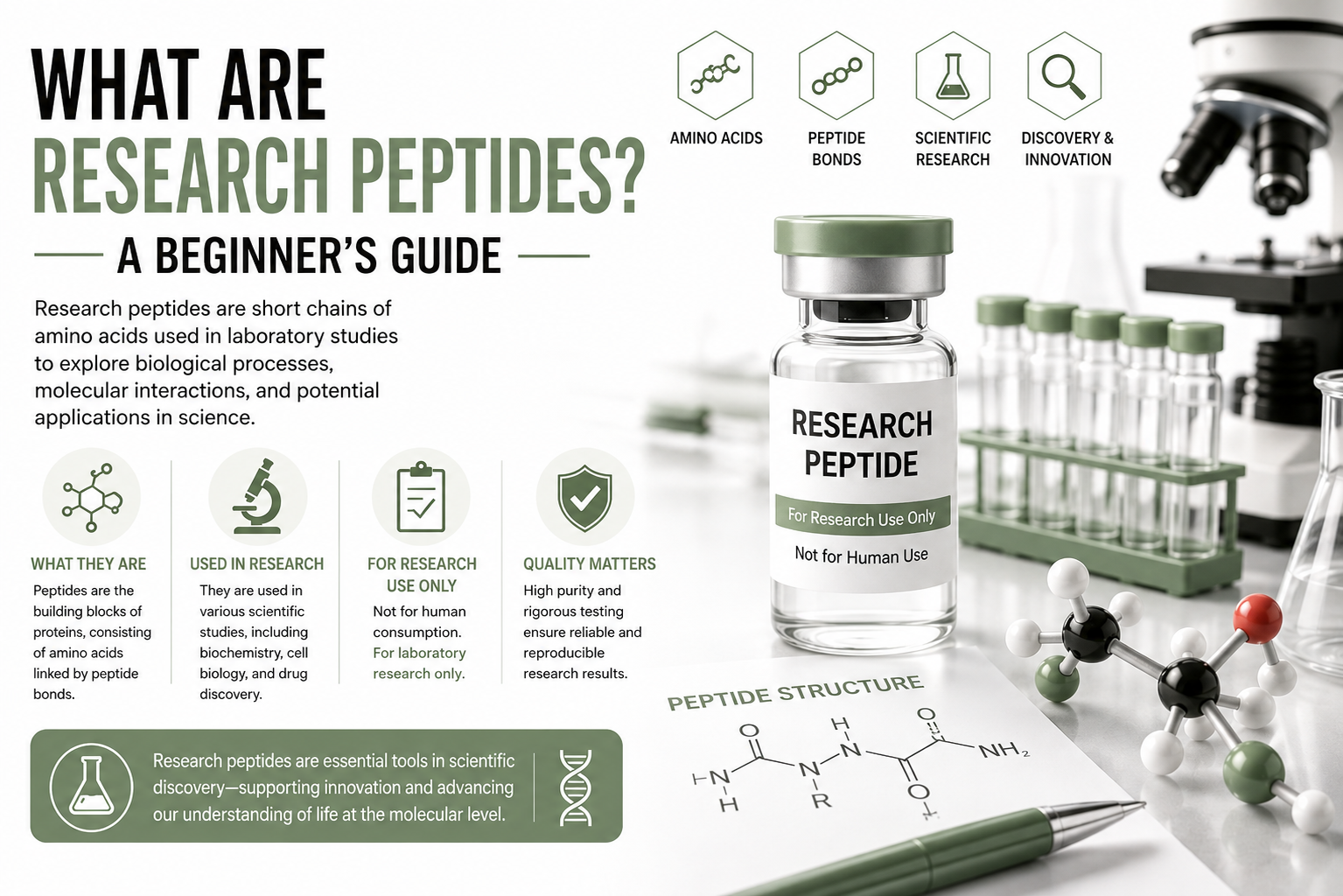
What Are Research Peptides? A Beginner's Guide
An introduction to what research peptides are, how they're studied in the lab, and what to look for before sourcing a research material.
Straightforward explainers on peptides, purity, testing, and what the specs on a research peptide label actually mean.
An introduction to what research peptides are, how they're studied in the lab, and what to look for before sourcing a research material.

A look at the areas of science where peptides show up, from molecular interaction studies to analytical chemistry and assay development.
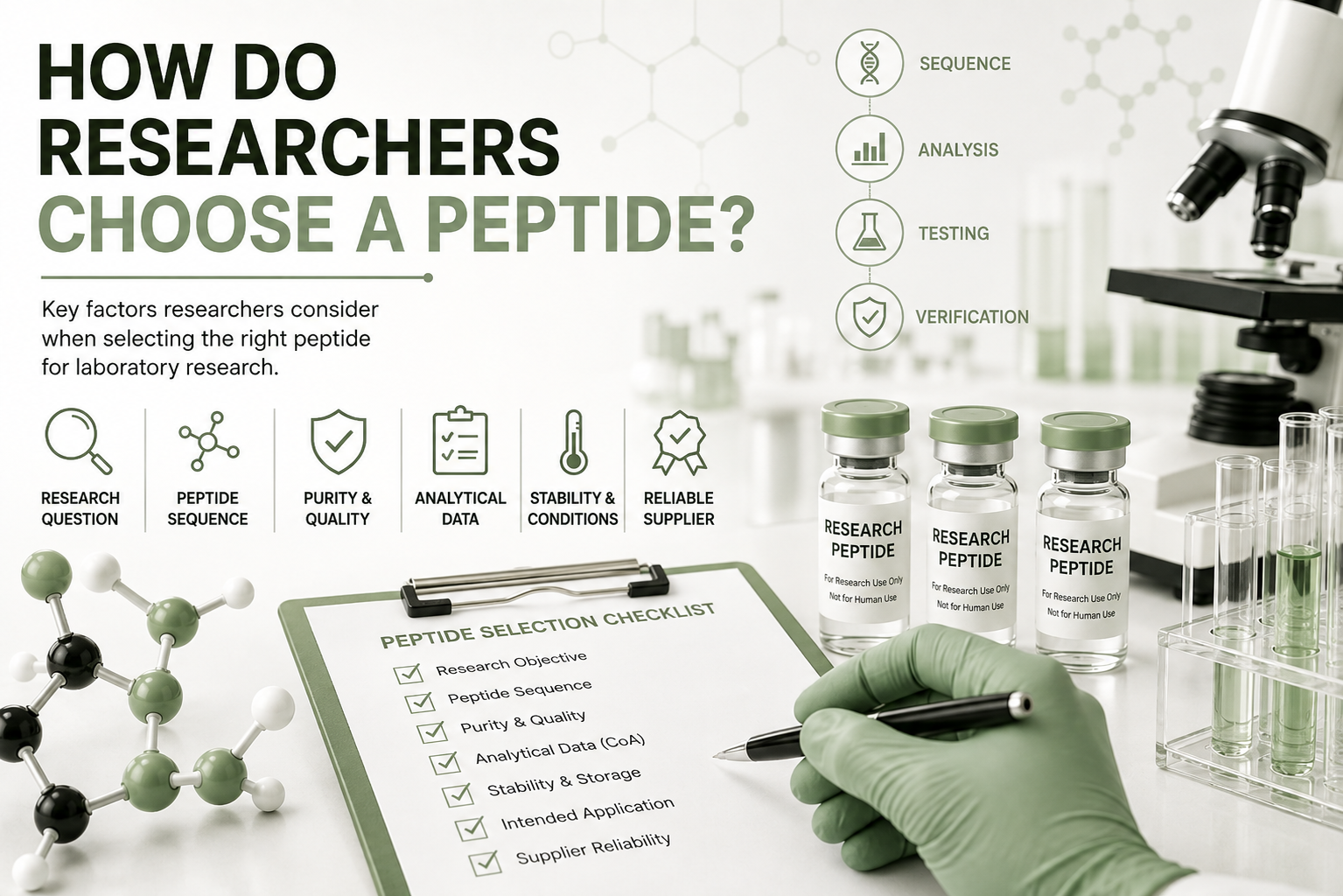
The key factors that go into selecting a research peptide, from the research question itself to purity, documentation, and supplier evaluation.
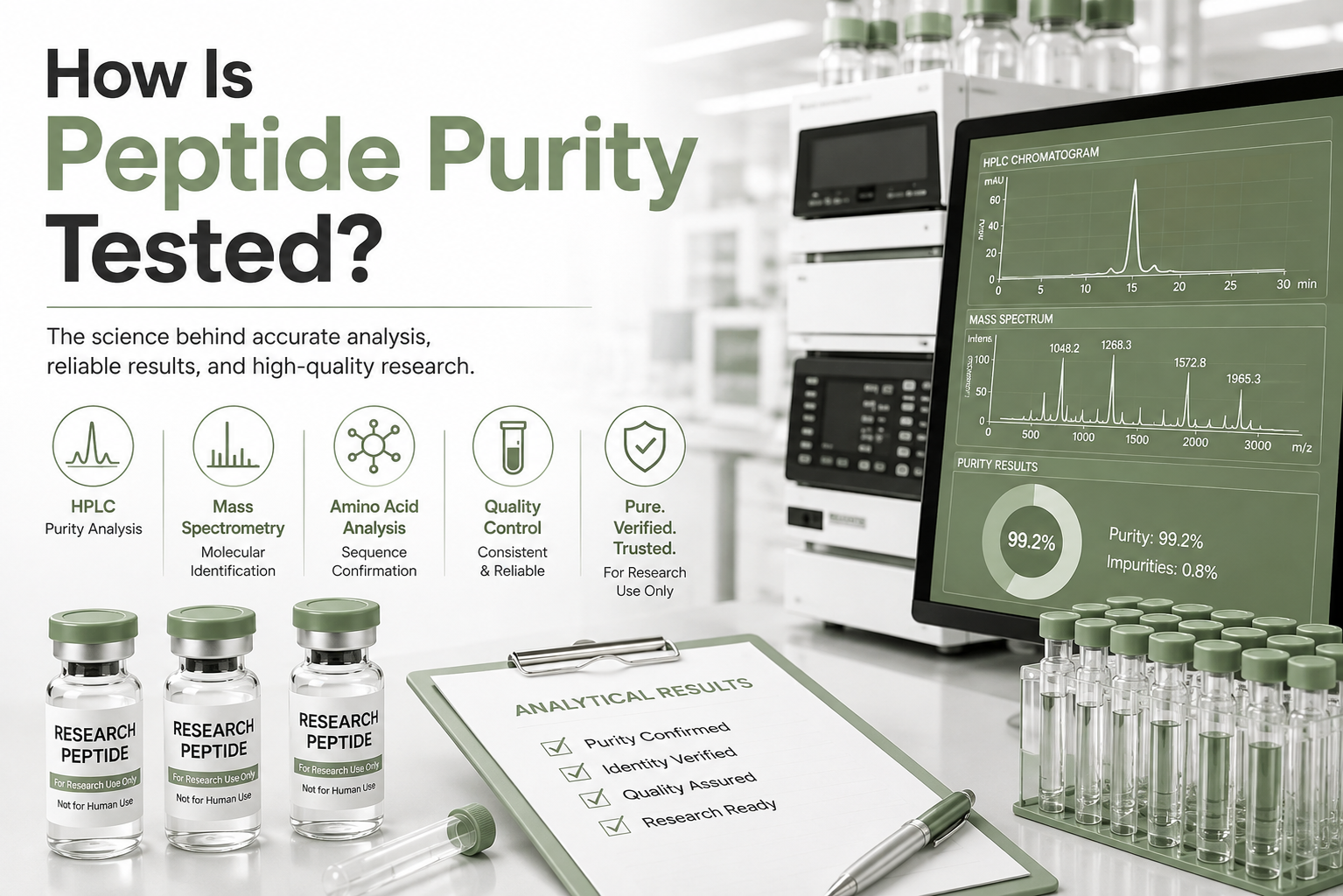
An explanation of how HPLC, mass spectrometry, and LC-MS are used to evaluate peptide purity, and what each method can and can't tell you.

A section-by-section walkthrough of a CoA — batch numbers, purity results, identity testing, and the red flags worth watching for.
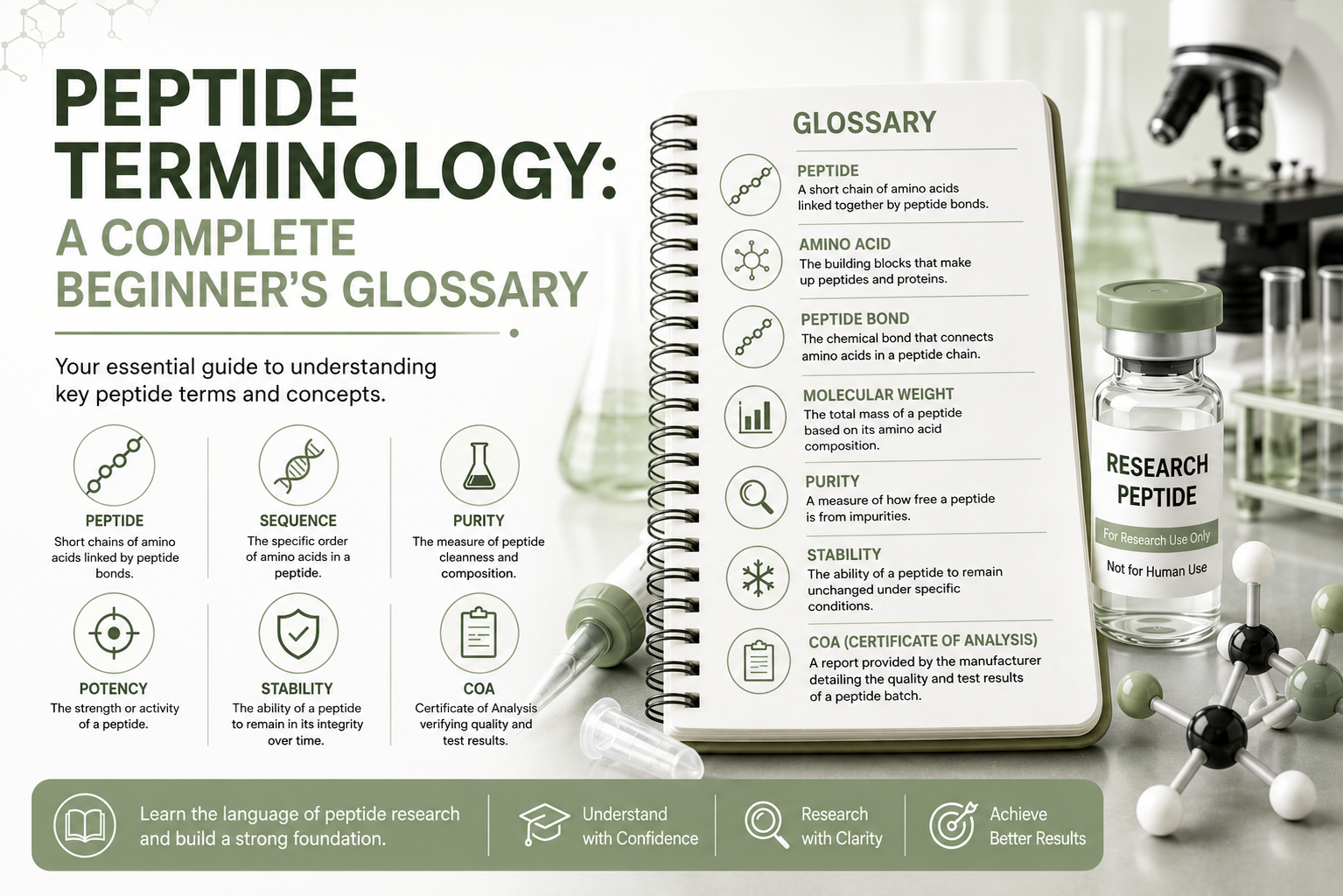
Plain-language definitions for the terms that come up most in peptide research, from HPLC and CoA to lyophilization and SPPS.

Why a research peptide isn't the same thing as an approved pharmaceutical, even when the chemical name looks identical.

A closer look at what the "+" in a 99%+ purity claim signifies, how that figure is tested, and why it isn't a stand-in for identity or overall quality.
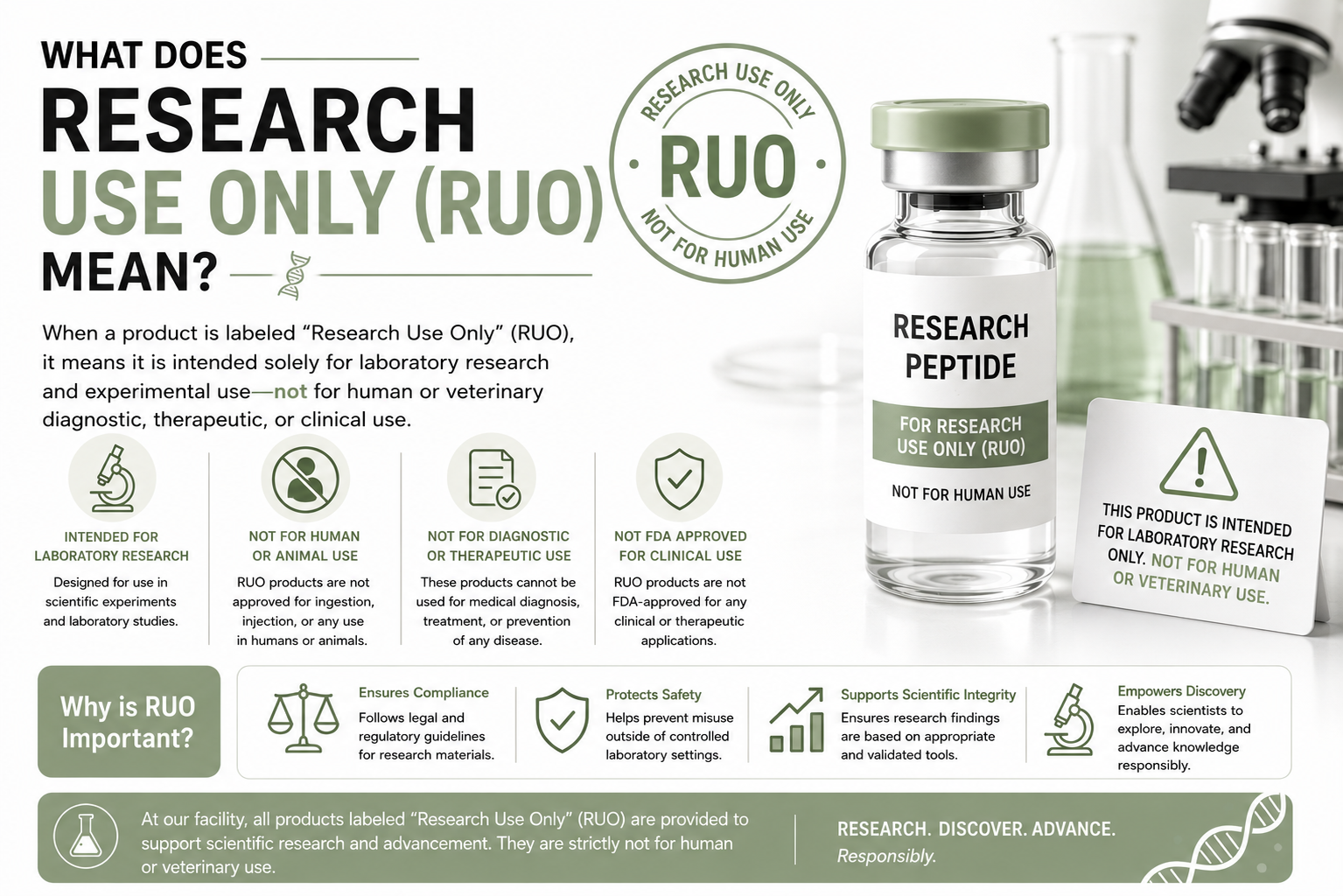
An explanation of the RUO designation, what it means for how research materials are meant to be used, and the common misconceptions to avoid.
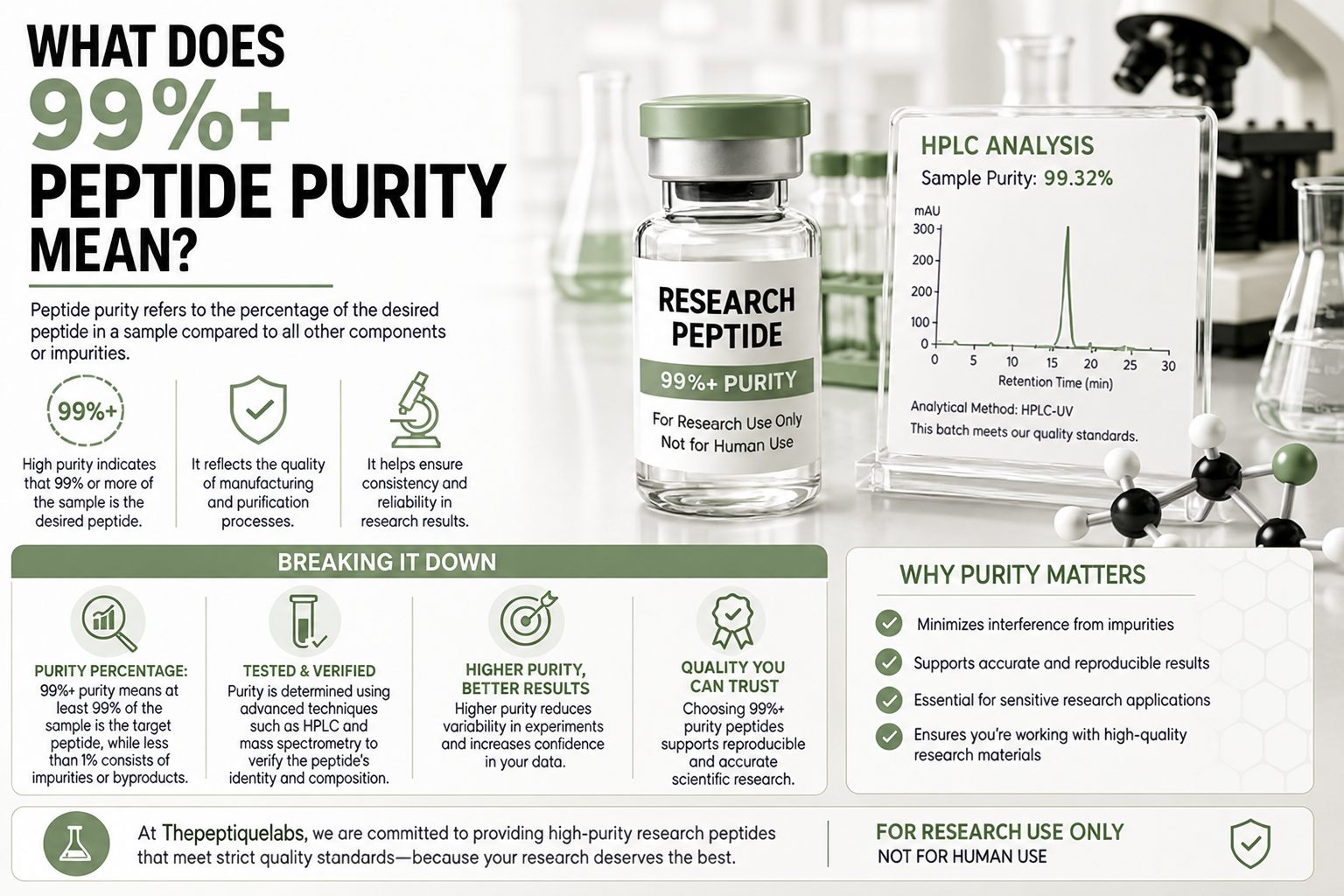
A breakdown of what a purity percentage actually represents, how it's measured, and why the testing method matters as much as the number itself.
For laboratory research use only. Not for human or veterinary use. Content on this blog is educational and is not medical advice.