
What Are Research Peptides? A Beginner Guide

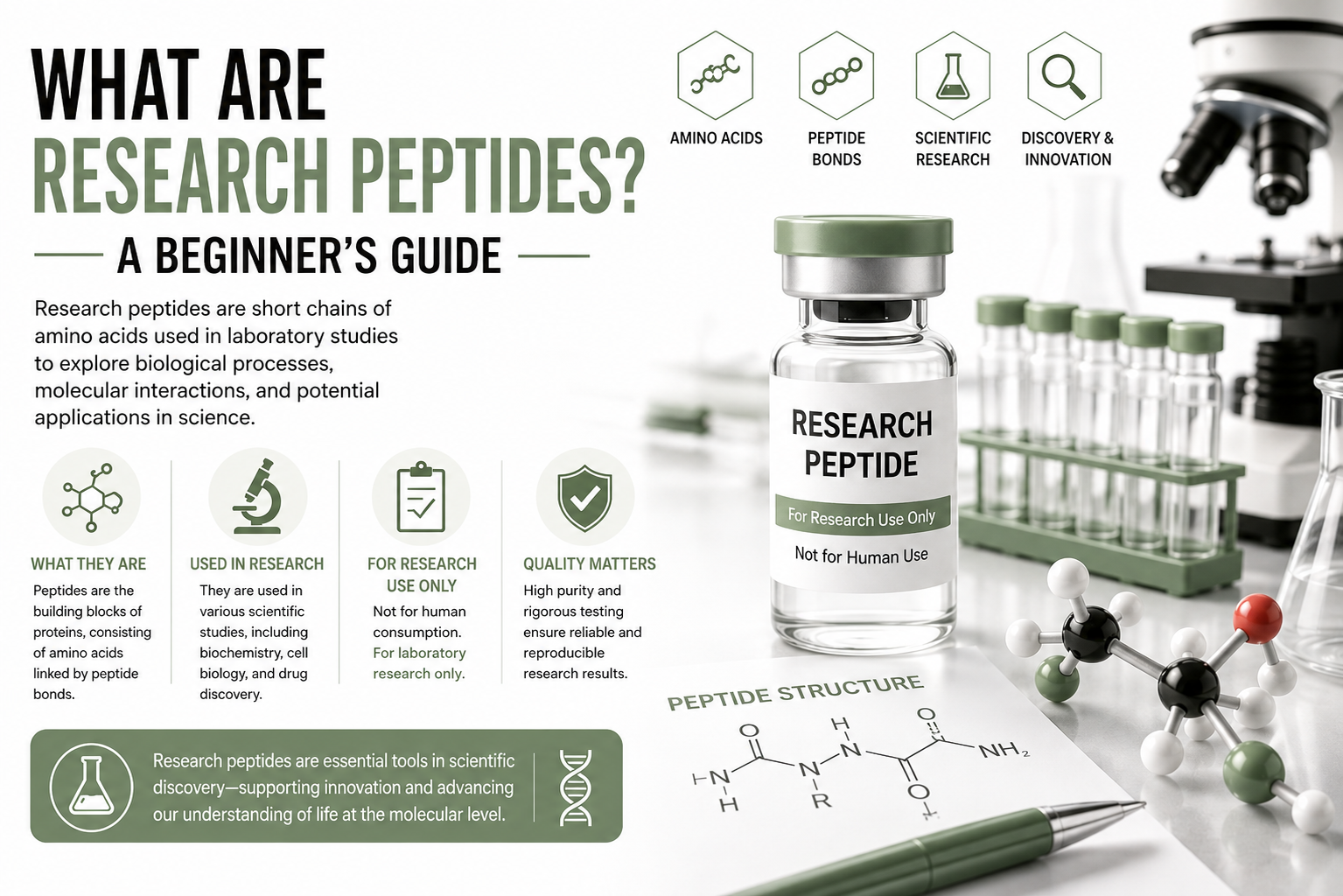
Peptides have become an important area of interest in modern scientific research.
Researchers study peptides across many fields, including biochemistry, molecular biology,
pharmacology, and cellular research.
But what exactly are research peptides, and how are they different from other peptide
products?
This beginner’s guide explains what research peptides are, how they are studied, what
researchers should look for when evaluating peptide products, and why proper
documentation and laboratory practices matter.
What Are Peptides?
Peptides are short chains of amino acids linked together by peptide bonds. Amino acids are
the building blocks used to form proteins, but peptides are generally shorter than proteins.
The specific sequence and structure of amino acids determine the characteristics of a
peptide. Because different peptide sequences can interact with biological molecules in
different ways, researchers can investigate peptides in a wide range of experimental
settings.
Peptide research can involve studying:
● Molecular interactions
● Cellular signaling
● Protein and receptor activity
● Biochemical pathways
● Peptide structure and stability
● Laboratory assay development
● Analytical and characterization techniques
What Are Research Peptides?
Research peptides are peptide compounds supplied for laboratory and scientific research
rather than for human or veterinary use.
They may be used by qualified researchers as experimental materials in controlled
laboratory environments. Depending on the peptide and research objective, scientists may
investigate properties such as molecular structure, stability, purity, binding characteristics, or
interactions with other biological molecules.Research peptides should be treated as research materials, not as consumer health
products or medicines.
Products marketed for research purposes should be clearly labeled with appropriate
research-use-only information and handled according to applicable laboratory procedures
and regulations.
What Does “Research Use Only” Mean?
You may see the abbreviation RUO, which stands for Research Use Only.
An RUO product is intended for laboratory research and experimentation. It is not
represented as a product intended to diagnose, treat, cure, or prevent a disease or medical
condition.
This distinction is important because a research chemical or peptide can have a completely
different regulatory status from an approved pharmaceutical product.
For researchers and laboratories, clear RUO labeling helps establish the intended purpose
of the material and supports responsible handling and documentation.
How Are Research Peptides Studied?
Research peptides can be investigated using a variety of laboratory techniques. The
appropriate method depends on the research question and the characteristics of the peptide
being studied.
Researchers may examine factors such as:
Purity
Purity analysis helps researchers understand how much of the target peptide is present
compared with other detectable substances.
Identity
Analytical testing can help confirm whether the material corresponds to the intended peptide.
Molecular Characteristics
Researchers may investigate molecular weight, structure, stability, or other chemical
characteristics.
Experimental Behavior
Depending on the research model, scientists may study how a peptide behaves under
specific laboratory conditions.The exact analytical methods used will depend on the peptide, laboratory equipment, and
research objectives.
What Should Researchers Look for When Purchasing
Research Peptides?
When sourcing research peptides, researchers should evaluate more than the product name
or advertised purity percentage.
Important considerations can include:
1. Certificate of Analysis
A Certificate of Analysis (CoA) provides information about testing performed on a
particular product or batch.
Depending on the supplier and testing method, a CoA may include information such as
identity, purity, batch information, and analytical results.
Researchers should review the documentation rather than relying solely on marketing
claims.
2. Batch Information
Batch or lot numbers allow researchers to connect a product with its associated
documentation.
Maintaining batch information can be especially important when conducting experiments that
need to be reproducible.
3. Analytical Testing
Different analytical techniques can provide different types of information about a peptide.
Researchers should consider whether the available testing is appropriate for the material
and their intended research application.
4. Storage Information
Peptides can have specific storage requirements. Researchers should follow the supplier’s
documented storage and handling recommendations and their own laboratory protocols.
Improper storage can affect the condition of a research material and potentially influence
experimental results.
5. Clear RUO LabelingA responsible research peptide supplier should clearly communicate that its products are
intended for research purposes and are not approved for human or veterinary use.
Why Purity Matters in Peptide Research
Purity can be an important consideration when selecting materials for laboratory
experiments.
Unwanted impurities can complicate experimental results, particularly when researchers are
attempting to characterize a specific compound or reproduce an experiment.
However, a stated purity percentage should not be viewed in isolation. Researchers should
also consider the analytical method used, batch documentation, identity confirmation, and
the overall quality of the supplier’s documentation.
Research Peptides vs. Pharmaceutical Peptides
Research peptides and pharmaceutical peptide products should not be confused.
A pharmaceutical product is developed and regulated for a specific medical purpose and
must meet applicable regulatory requirements.
A research peptide, on the other hand, is supplied as a laboratory research material. It is not
automatically equivalent to an approved pharmaceutical product simply because the
chemical name may be similar.
The intended use, manufacturing standards, regulatory status, testing, and documentation
can all differ.
Are Research Peptides Safe for Human Use?
Research-use-only peptides should not be used by humans or animals.
An RUO designation means the material is intended for laboratory research, not
self-administration or treatment.
Research materials may not have been evaluated, manufactured, packaged, or approved for
human or veterinary use. Anyone conducting research should follow applicable institutional,
laboratory, and regulatory requirements.
How Should Research Peptides Be Handled?
Researchers should handle peptide materials according to appropriate laboratory
procedures.
Depending on the material and experimental setup, this can include:● Following the supplier’s storage instructions
● Maintaining accurate batch and lot records
● Using appropriate laboratory equipment
● Following institutional safety procedures
● Avoiding unauthorized human or veterinary use
● Maintaining appropriate documentation
● Following applicable laws and regulations
Researchers should consult qualified laboratory personnel and applicable safety
documentation when establishing handling procedures.
Frequently Asked Questions
What does RUO stand for?
RUO stands for Research Use Only. It indicates that a product is intended for laboratory
research and is not intended for human or veterinary use.
Are research peptides the same as medications?
No. Research peptides are laboratory research materials and should not be considered
approved medications or pharmaceutical products.
What is a Certificate of Analysis?
A Certificate of Analysis, or CoA, is documentation that reports analytical testing performed
on a specific product or batch.
Why is peptide purity important?
Purity can help researchers evaluate the quality and suitability of a research material for a
particular experiment. Researchers should also consider identity, testing methodology, batch
information, and other documentation.
How should research peptides be stored?
Storage requirements vary between materials. Researchers should follow the supplier’s
storage instructions and applicable laboratory protocols.
Can research peptides be used for self-experimentation?
No. Research-use-only products are intended for laboratory research and are not intended
for human or veterinary use.
Final ThoughtsResearch peptides are specialized laboratory materials used by researchers to investigate
peptide chemistry, molecular interactions, biological processes, and other scientific
questions.
For beginners entering peptide research, understanding the difference between research
materials and approved pharmaceutical products is an important first step. Researchers
should also pay attention to documentation, analytical testing, batch information, storage
requirements, and responsible laboratory practices.
When sourcing research peptides, choosing a supplier that provides clear product
information and appropriate documentation can help researchers make more informed
decisions about the materials used in their experiments.
Research Use Only. Not for human or veterinary use.